Empowerment Through QiGong
Medical Qigong
11/16/20251 min read

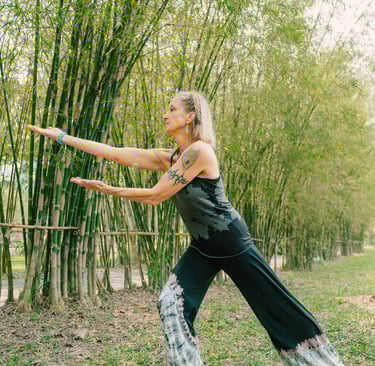
Empowerment, Connection, Well-being
The History of Medical Qigong —
and the Ancient Wisdom Behind It
Medical Qigong stretches back over 4,000 years, emerging from the earliest Chinese healing and philosophical traditions. Much of its foundation comes from teachings attributed to Lao Tzu, author of the Tao Te Ching, who emphasized living in harmony with the natural flow of life—what he called the Tao. Qigong embodies these principles by helping the body return to balance, ease, and alignment with nature’s rhythms.
Another pillar of Qigong is the I-Ching, the Book of Changes. Its 64 hexagrams describe the ways energy moves, shifts, and transforms. Practitioners observed that these universal patterns mirror how Qi circulates through the human body. In this way, Qigong became a living expression of the I-Ching: breath and movement guided by the understanding that everything is constantly changing, and healing happens when we learn to move with those changes rather than against them.
Some modern Medical Qigong systems also reference the concept of the 16 energetic codons (or energy “blueprints”) that correspond with core emotional and physiological states. These codons help practitioners identify imbalances and direct healing practices with more precision—an ancient energetic model that mirrors how DNA codons carry instructions for the body.
Together, these influences give Qigong its empowering nature. It doesn’t rely on outside tools or equipment—it awakens the healer within. Through breath, intention, and gentle movement, Qigong helps regulate the nervous system, clear stagnant emotions, strengthen organ function, and reconnect you with your own innate intelligence.
In a world that pulls us outward, Qigong pulls us back home—to balance, vitality, and inner power.